
The House
Our Artisans
Gestures handed down
Gestures handed down
Watching an artisan at work always leaves the same impression.
The silence. The calm concentration. Not a single wasted movement. Someone in complete command of their craft.
Every movement has a purpose. Every tool has its place. Every gesture is exact.
Soothing to watch.
Work well done
Some finishes are noticeable at once.
Rough. Badly fitted corners. Uneven surfaces. That uncomfortable feeling: they did not take the time.
The opposite is noticeable too. An invisible attention to detail. A quiet rigour. Finishes you do not notice straight away, but feel as soon as you handle the piece.
“Work well done is never spectacular. It is simply right.”
01
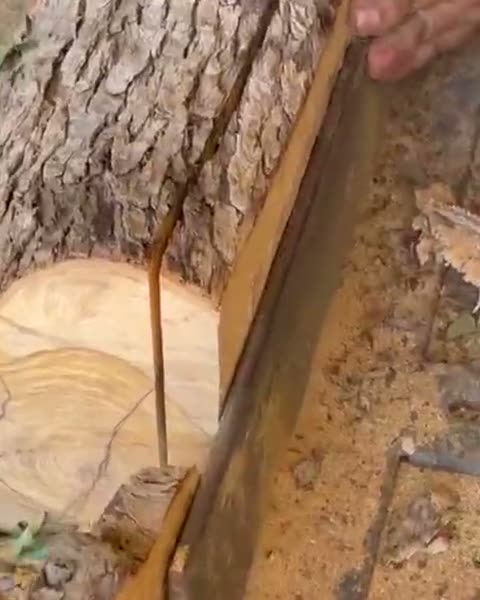
Choosing the material
Everything starts here.
Even the finest artisan can do nothing with a poor material.
Badly seasoned wood. Plant fibre harvested too early. Poorly prepared clay. Linen woven too tightly.
The artisan examines. Assesses. Selects. Rejects.
This stage takes time. It cannot be seen in the finished object. Yet it determines everything else.
02
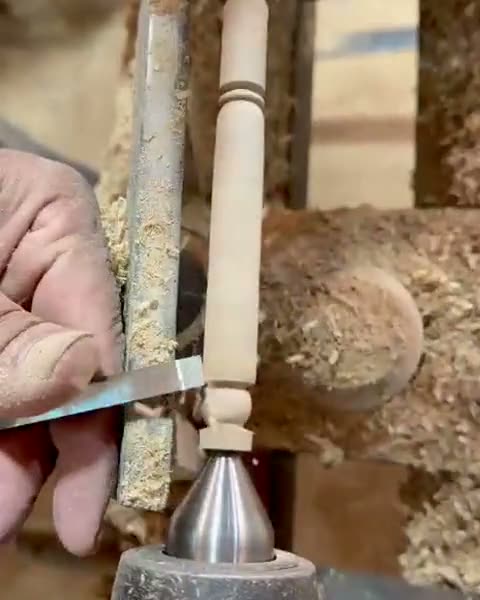
Shaping
Living materials move.
Wood warps with humidity. Fibre shrinks as it dries. Clay changes in the kiln. Linen tightens or slackens with the air.
The artisan has to anticipate these movements. Adjust each gesture. Compensate for irregularities. Read the material. Feel the tension. Know when to press on. When to stop.
These decisions are made in a split second.
None of this can be automated: even with the tool, it is the hand that decides. Impossible to explain completely. It is felt. It is learnt through thousands of hours of practice.
Too thin, an object will soon break. Too thick, it will be uncomfortable. Too rough, it will catch. Too smooth, it will lack character.
“Perfect balance is not found in a manual. It is found in the hand.”
03
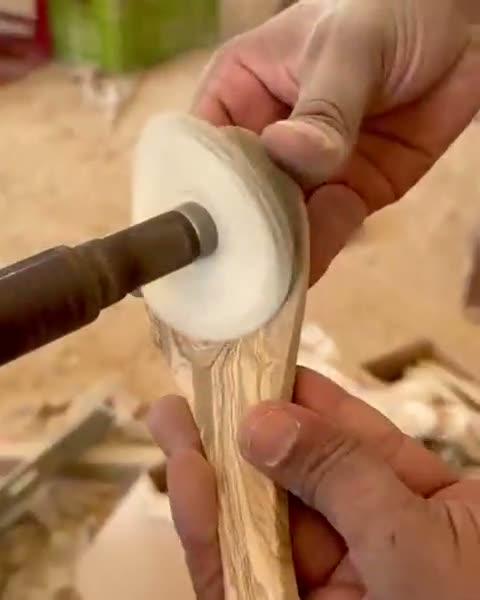
The finishing
The difference between holding a pleasant object and an unpleasant one can never be seen.
It is in the touch. Nothing snags. The softness. The comfort.
It comes from the final work. Grain after grain. Little by little. Checking by touch. Reworking imperfect areas. Respecting natural forms rather than forcing an artificial geometry.
This stage takes time, piece by piece.
It cannot be seen. It is felt.
Every time you pick the object up. Every time you handle it. In the comfort of its grip. In the softness of its touch. In the pleasure of using it.
04
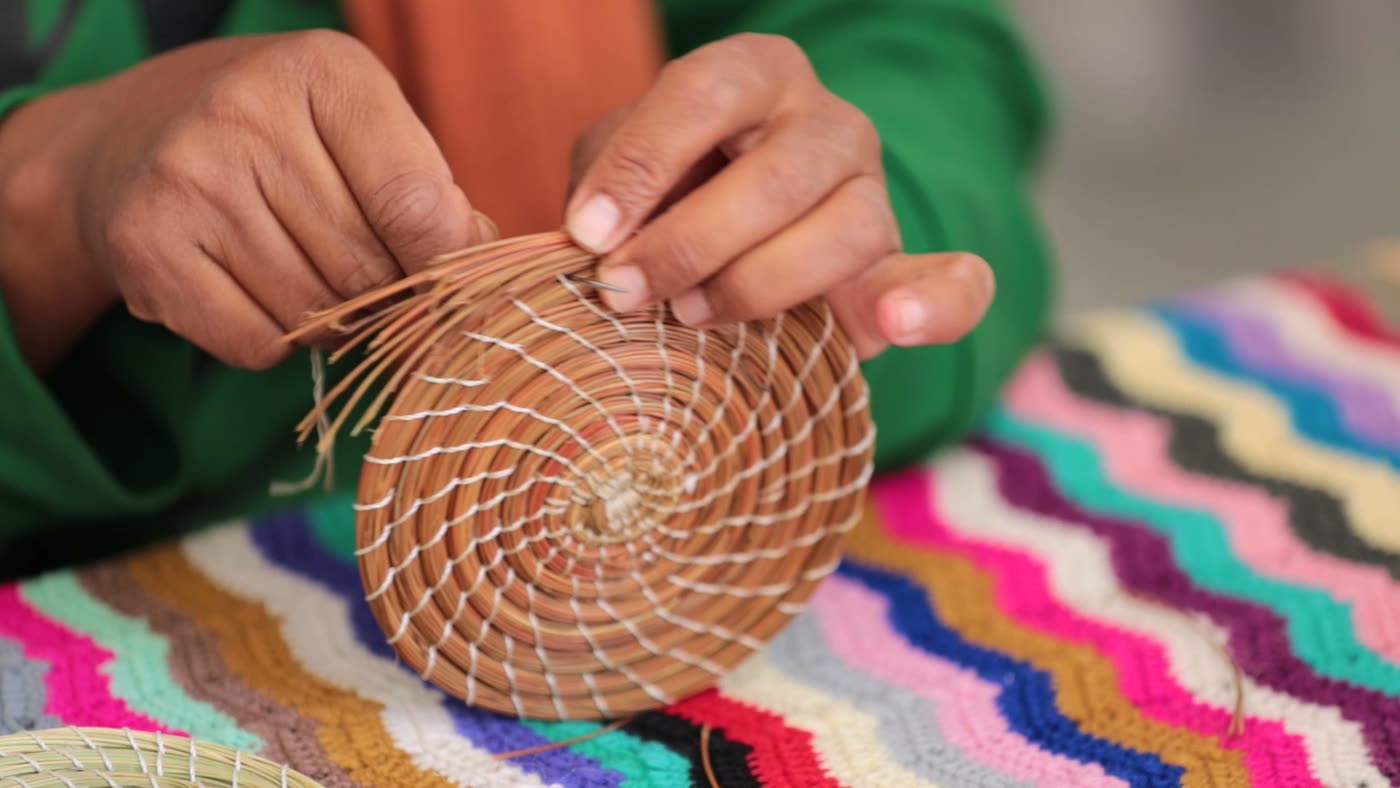
What is passed on
A craft is never learnt in a few weeks.
The gestures take years. Sensitivity develops slowly. The eye is trained little by little. The hands remember.
An apprentice watches. Copies. Makes mistakes. Starts again. Refines. Corrects. Perfects.
Some gestures cannot be explained. They are shown. Repeated. Handed down. Until they become second nature. Until they no longer require conscious thought.
This transmission takes a great deal of time. But it preserves a savoir-faire that could otherwise vanish. It carries on a quality found nowhere else. It ensures that in ten years, in twenty, someone will still know how to make these objects.
The hands of our workshops
Behind every piece, a pair of hands.
Karim
Cuts the olive wood · Tunisia
Sami
Olive wood turner · Tunisia
Nabil
Finishing and oiling · Tunisia
Leila
Harvests the alfa · Tunisia
Amira
Has woven alfa since 2017 · Tunisia
Assumed first names: our artisans prefer to stay out of the spotlight. Their gestures, however, are very real.
The invisible signature
“Every OLIVANCE piece bears the invisible signature of an artisan. Never their name. But their touch. In the feel of the material. In the balance of the piece. In the careful finishing. In that immediate feeling: this one is well made.”
That is exactly what they seek. Not recognition. The satisfaction of work well done.
View the Creations