
The House
Our Materials
What endures
What carries a memory
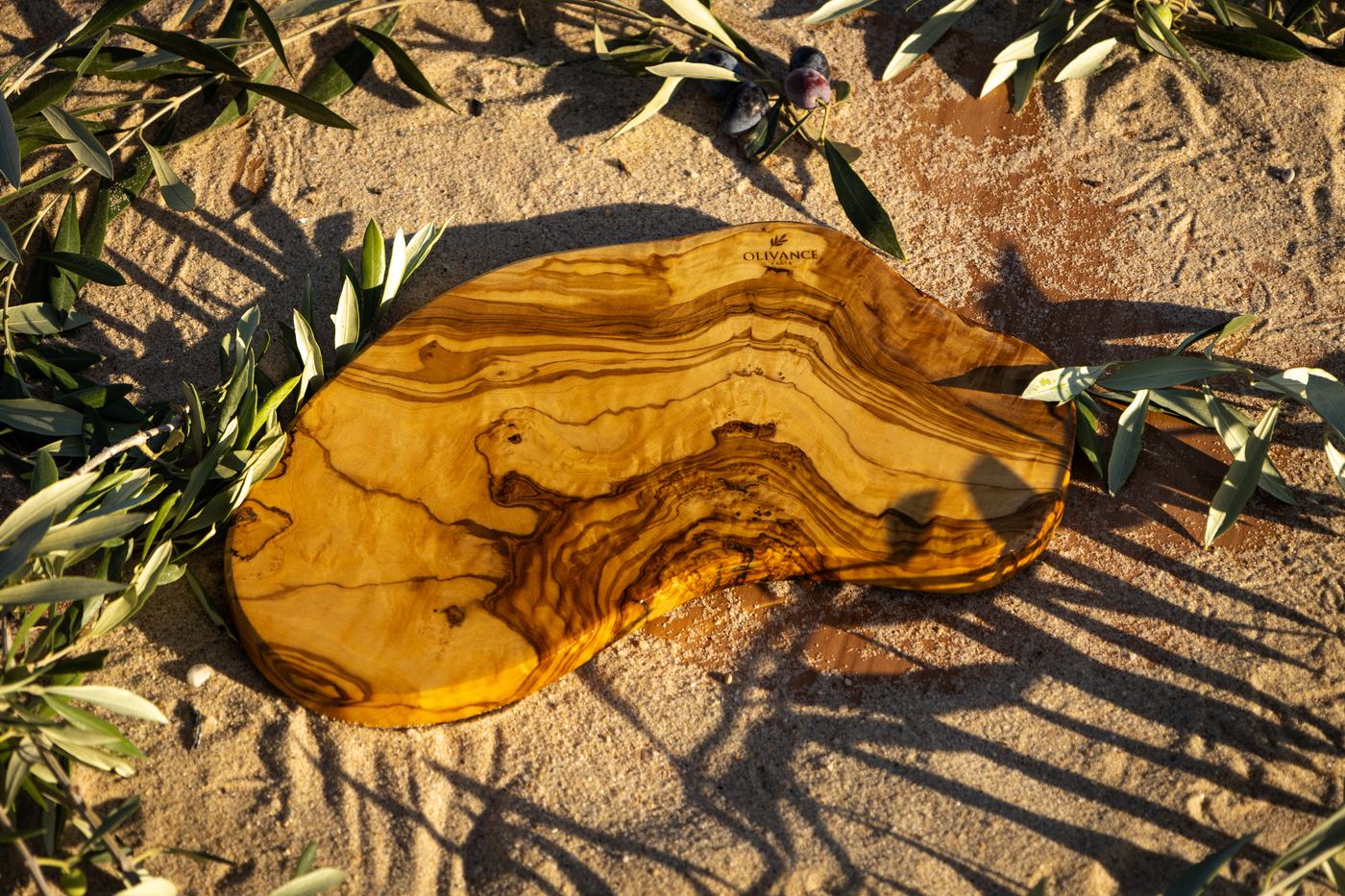
Some materials carry a memory.
Dense. Heavy. Warm in the hand. Soft despite the texture. With those unique patterns that tell of decades of growth.
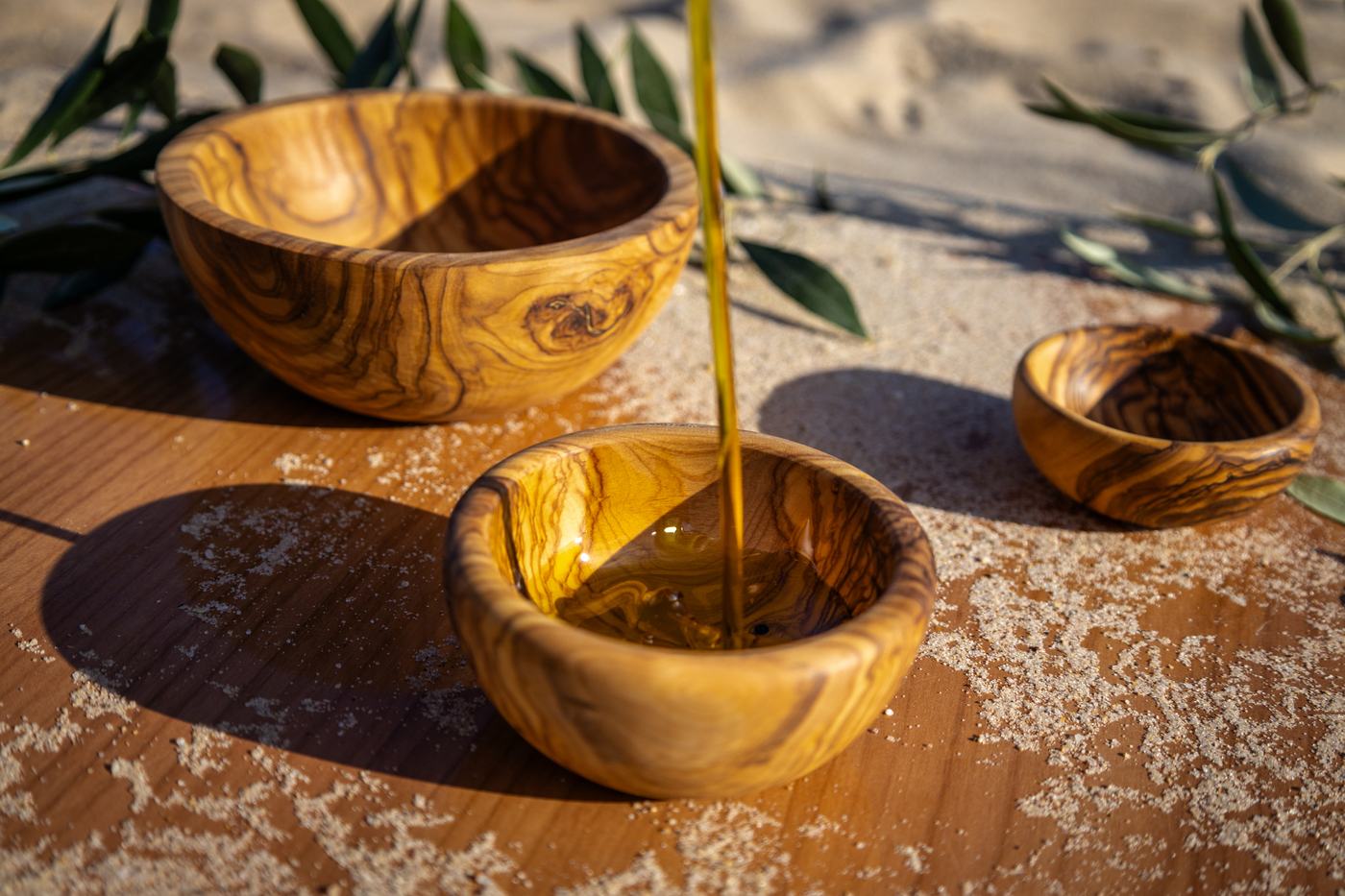
Olive wood. Decades of Mediterranean sun etched into its grain. A pattern no machine can reproduce.
Alfa fibre. Shaped for thousands of years. Supple. Resilient. Developing a golden patina over time.
Soon, fired clay. Passing through the generations without losing its lustre.
And woven linen, also to come. Softening with every use.
These materials share something. They carry patience. Sun. Wind. Seasons. The long run of time.
They have practical qualities too. Sturdy. Pleasant to hold. Made for everyday use, and simple to care for.
“But what makes them irreplaceable is something else. They age beautifully.”
Olive wood · Crafted in Tunisia
From tree to object
Rather than telling you that olive wood is beautiful, we would rather show you how it becomes so.
The material
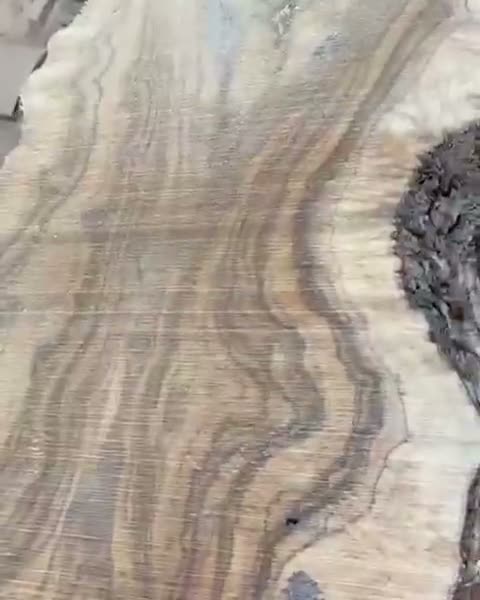
It all begins with the material.
An olive log, its bark, its grain still hidden. Every piece is different: it is the wood that decides the shape.
The gesture
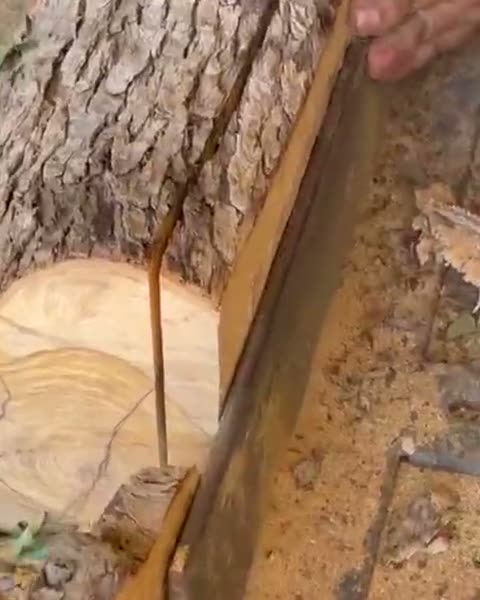
Then comes the gesture.
The wood is cut on the saw, guided by hand. We look for the finest grain and set aside any cracks.
The form
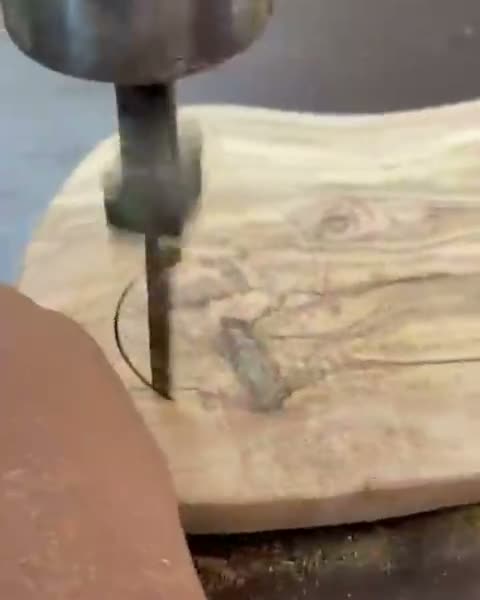
The material takes shape.
Drilling, sanding: little by little, the piece emerges from the block.
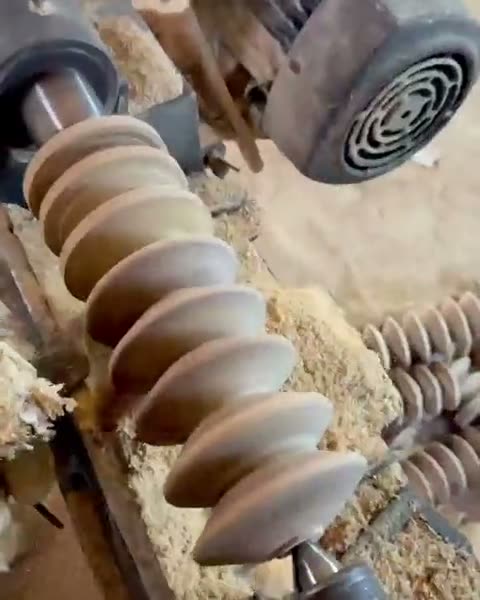
Turning
No two are quite the same.
On the lathe, every bowl and every spoon is shaped one at a time. The grain never repeats itself.
The finish
Every piece bears the marks of its making.
Polishing, then oiling with extra virgin olive oil: it nourishes the wood and brings out its shades. The difference shows at first glance.
Alfa · Harvested and woven in Tunisia
From the steppe to the basket
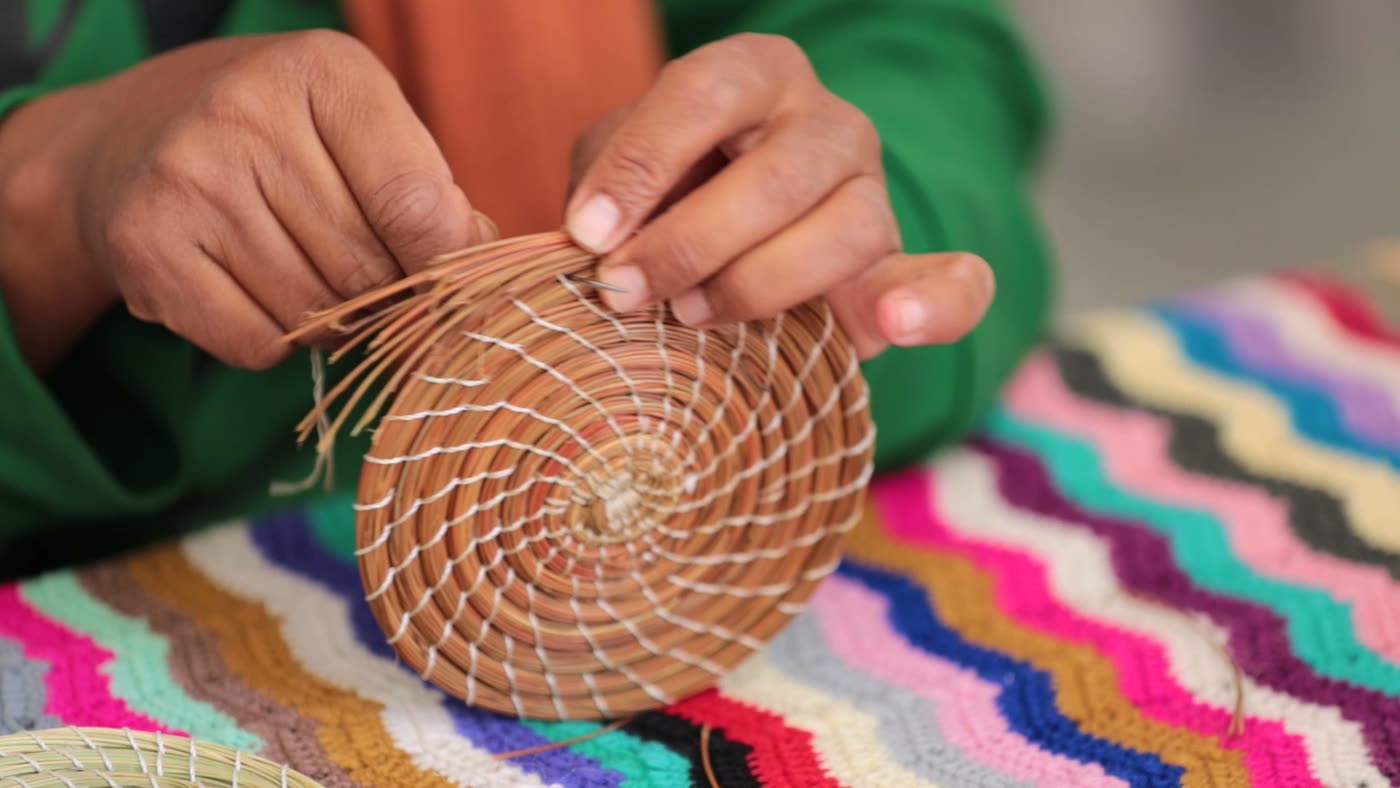
Alfa, also known as esparto, is a wild plant. It grows on the steppes and in the mountains.
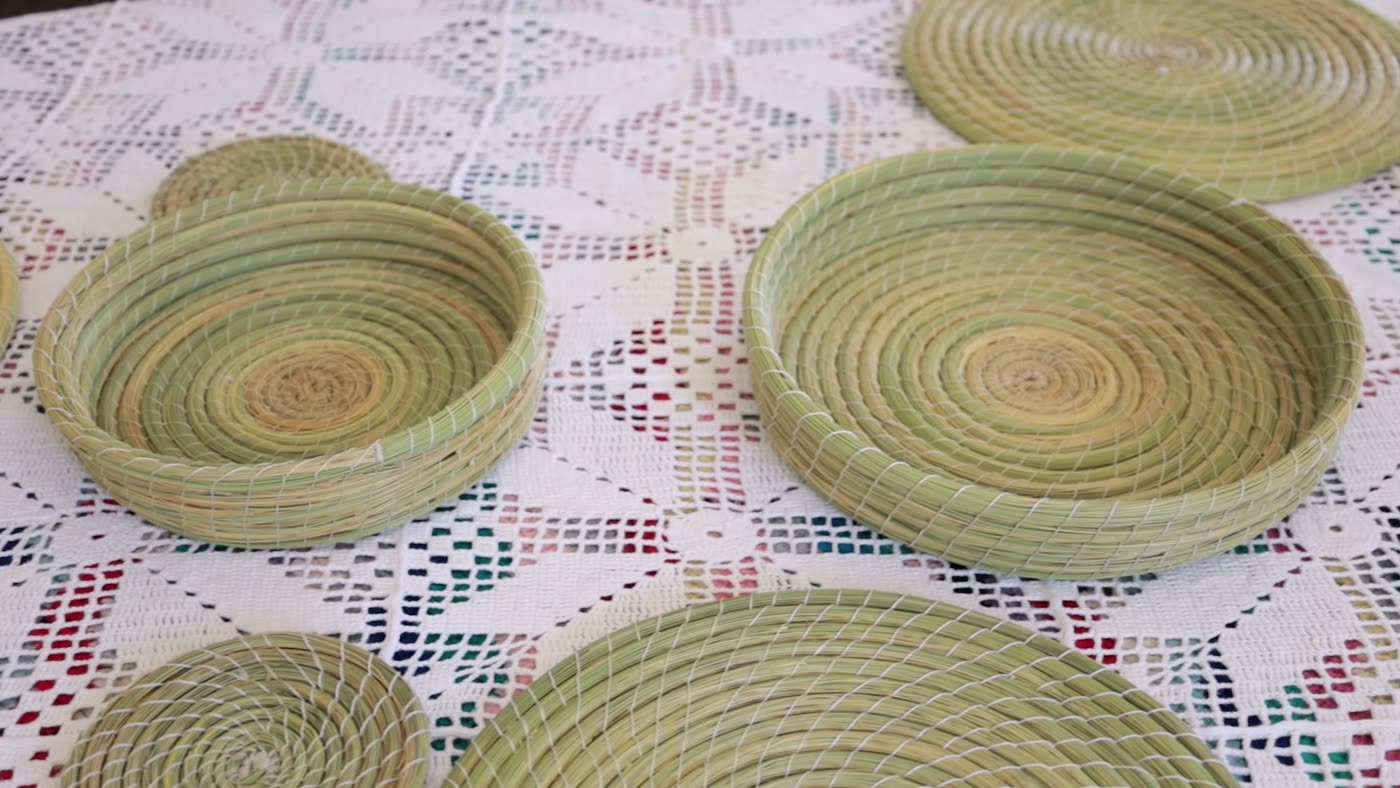
It is picked by hand, sorted, then dried in the sun until it is ready to be worked. Then comes the weaving, strand by strand, in a spiral.
Natural or dyed, every basket keeps the trace of the hand that wove it.
How objects evolve
Some objects lose their shine from the very first use. From the very first scratch. They will never look as good as on the day they were bought.
Others gradually take on a patina. They develop nuances. They tell their story.
These materials belong to the second kind.
They colour slightly. Darken in places. Develop a patina that tells of the gestures. That darker area where something is always set down. That slight fading. Those traces of use that gradually form a familiar pattern.
“Life, etched into the material.”
In ten years’ time, the object will no longer look exactly as it does today. It will be more beautiful. Unique. Irreplaceable. Full of memories.
Simple care
A varnished object that cracks becomes a chore.
Impossible to care for simply. It would need sanding. Revarnishing. Too complicated. Too technical. We give up. The object turns ugly.
Living materials work differently.
A few drops of oil for some. A little water for others. A soft cloth. Two minutes. The lustre returns. The protection is renewed. The material is nourished.
This care is not a chore. It is a moment. A simple gesture. Almost soothing. Rubbing slowly. Watching the material come back to life under your hands.
A few minutes a month. In return, the object lasts for decades.
The sum is simple.
Packaging
You order a small object. A huge parcel arrives. You unwrap five layers of plastic. Only to find the product lost in the middle of oversized packaging.
All of it ends up in the bin.
OLIVANCE packs simply. No needless frills. Our aim: to move towards zero plastic, parcel after parcel. We are not there everywhere yet, but that is the direction.
The parcel protects the object properly. Without over-packaging. Without waste. Without guilt.
You open it. Perhaps you keep the box. The rest goes into the recycling. Two minutes and it is done.
As it always should be.
What will evolve
In ten years. In twenty. Some objects will have gone. Others will have arrived. Some will have been passed on. Others inherited.
OLIVANCE will evolve too.
Other woods, perhaps. Other plant fibres. Other terracottas. Other weaves. Other Mediterranean crafts.
But the criteria will remain the same.
Natural materials. Artisan craftsmanship. Ageing gracefully over time. Made to be passed on.
Look at an old object made from a natural material. A basket. A board. A bowl. A piece of cloth. Something inherited. Salvaged. Found.
Still sturdy. Still beautiful. Marked by time but not damaged. Able to serve for decades more.
That is exactly what any object should be.
Living materials hold out that promise. They ask for a little care. A few minutes a month. A simple gesture. A light touch of attention.
In return, they stand the test of time. They tell a story. They become irreplaceable.